Building What’s Next: Mariculture and Kodiak’s Workforce
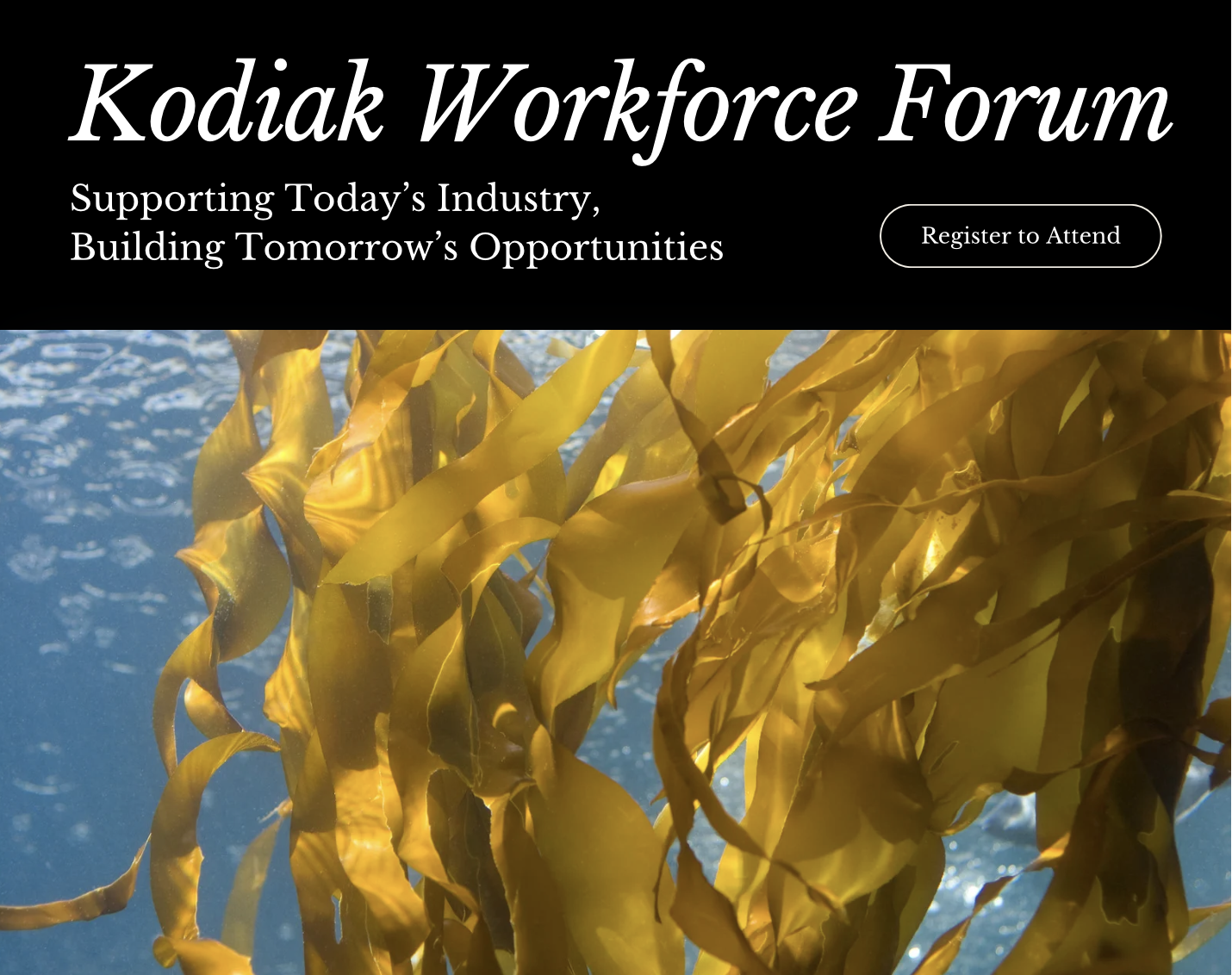
Mariculture is often talked about as an emerging opportunity in Alaska.
In Kodiak, it is already taking shape through coordinated work, investment, and partnerships.
Over the past year, Kodiak Economic Development Corporation has worked alongside partners to support the development of this industry in a way that is intentional and connected to long term success.
This includes business planning work for a kelp processing facility, supported through partnership with the UAA Center for Economic Development, and funding secured through Southeast Conference to advance innovative mariculture efforts. That funding is now being used to move toward a shovel ready engineering plan for the facility.
At the same time, this work has been closely coordinated with the KP3 project, the Sun’aq Tribe, Kodiak Ocean Growers, kelp farmers, and market partners to ensure that development is aligned, from production to processing to market.
This level of coordination is important. Industries do not grow successfully in isolation. They require alignment between partners, infrastructure, and long term planning.
There is also real progress happening today.
The business plan for WildSource has been completed and is already helping guide next steps. Engineering work for the processing facility is underway, with additional planning focused on equipment and operational considerations. A new website for the processor is nearing completion and will help highlight the farmers who are producing kelp here in Kodiak.
These are not early stage ideas. They are steps that move this industry forward in a practical way.
As this work continues, it also raises important questions about workforce.
Industries do not grow successfully in isolation.
They require alignment between partners, infrastructure, and long term planning.
Mariculture has the potential to create opportunities at multiple levels. This includes work at the farm level, at the processing facility, and in businesses that develop products from kelp and other mariculture resources. It may also provide additional or complementary opportunities for those already working in fisheries, as well as for those entering the workforce.
As with any growing industry, early workforce alignment matters.
Understanding what skills are needed, how people are trained, and how pathways are created is part of building an industry that is sustainable and beneficial to the community.
This is one of the reasons mariculture is included as a key segment of the Kodiak Workforce Forum.
It provides an opportunity to connect what is happening in this emerging industry with the broader conversation about workforce development, training, and career pathways.
It also invites a larger question for Kodiak.
Our community has an abundance of natural resources and a strong history of building industries around them. Mariculture is one example of how research, investment, and local effort can come together to create something new.
As with any growing industry, early workforce alignment matters.
Understanding what skills are needed, how people are trained, and how pathways are created is part of building an industry that is sustainable and beneficial to the community.
It also invites us to ask what comes next.
Where else can Kodiak build on its strengths. What opportunities are emerging that may benefit from early coordination. How can we support what is already developing while also being thoughtful about future possibilities.
These are questions that benefit from broad participation.
Employers, educators, and community partners each play a role in shaping how industries grow and how opportunities are created.
The Kodiak Workforce Forum is one place where those perspectives come together.