
Mariculture
Dashboard
Plans, numbers and hands-on tools to help Kodiak grow its kelp farming industry.
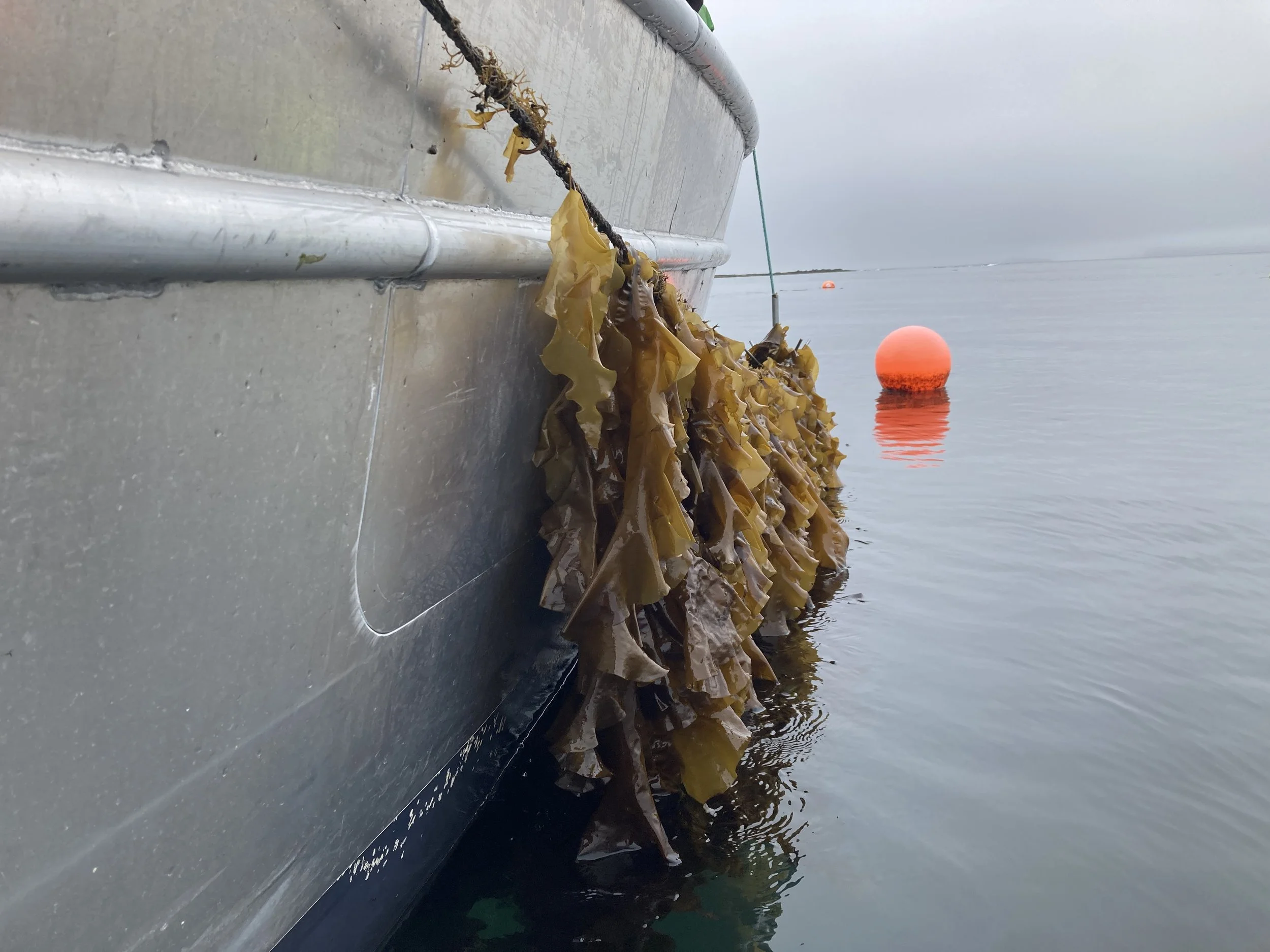
Kodiak’s kelp and oyster farmers are building a new island industry.
This dashboard puts the plans, the numbers and the ways to get involved in one place, so new farmers can get started and partners can work from the same information.
Last updated November 2026. KEDC keeps this page current as new information comes in.Start or grow a farm
Steps, startup costs, a yield planner and funding to get your farm in the water.
See the steps →︎Build a career
Training, internships and paid local work in Kodiak’s growing mariculture industry.
Explore careers →︎Invest in what works
The research, numbers and processing plans behind Kodiak mariculture.
Read the plans →︎What it takes to farm kelp in Kodiak
Sources: Kodiak Kelp Farming Inventory and Support Tools, UAA Center for Economic Development, March 2026. Funding total from KEDC’s report to the Kodiak City Council, September 2026.
Research you can build a farm on
KEDC and the UAA Center for Economic Development (CED) produced two plans with funding from a USDA Rural Business Development Grant.
Kodiak Kelp Farming Inventory and Support Tools
Remote farms can break even with a large startup grant and good yields, but not yet without ongoing grants. The near-term path: grow farming and processing close to Kodiak City first.
Download the report (PDF)At-Sea Kelp Processing Documentation and Financial Model
A vessel that shreds and stabilizes fresh kelp on board and brings it to town in totes. Trips only pay off when the vessel is fully loaded.
Download the model (PDF)Six steps to your first kelp harvest
Learn the basics
Talk with a Kodiak grower and take a course through Alaska Sea Grant or the Kodiak Seafood and Marine Science Center.
Pick a site
Check water depth, exposure, access and nearby uses.
Apply for permits
ADF&G aquatic farm permit, DNR tideland lease and Army Corps permit. Oysters also need DEC approval.
Plan your costs
Use the startup cost estimator below. A startup grant cuts the break-even yield roughly in half.
Line up a buyer
Talk with WildSource and the Sun’aq Tribe of Kodiak processing facility before you seed.
Get help
Kodiak Ocean Growers, Alaska Sea Grant and the partners below offer training and advice.
Not sure where to begin? Start with the people already doing it.
Meet Kodiak’s mariculture partnersPicture your first season
You’ve talked with a grower. You have a sheltered spot in mind. Now the real question: could a kelp farm actually pay? Before you buy a single line or anchor, you can try your farm out right here, using the same numbers the UAA Center for Economic Development used to study Kodiak kelp farms.
What will it cost to get started?
Set your acres, gear, seed and crew pay, and see your first-year budget and how much a startup grant covers.
How much kelp will I grow, and will it pay?
Enter your yield and price to see your harvest and revenue, and how your yield compares with what it takes to break even.
How will my kelp get to market?
See what it costs to process and haul kelp back to Kodiak with an at-sea processing vessel, and why nearby farms teaming up helps.
Each tool takes about a minute. Change any number to match your own plan.
Startup Cost Estimator
A rough first-year budget for a new kelp farm, using unit costs from the Kodiak kelp farming study. Change the numbers to fit your plan.
Your plan
| Item | Cost |
|---|
Seed line assumes 9,600 ft of line per acre. Employee fringe benefits are 10% of captain and crew pay, and a 20% contingency is added to first-season operating costs, as in the study. Not included: a vessel, moorings, permit fees, insurance, packaging, and harvest or processing costs.
Source: Kodiak Kelp Farming Inventory and Support Tools, UAA Center for Economic Development in partnership with KEDC, March 2026, funded in part by a USDA Rural Development Rural Business Development Grant. These figures are for understanding feasibility, not a precise forecast or quote. This institution is an equal opportunity provider.
Get inspired: kelp farms and support in Kodiak and Alaska
Kelp Farm Planner
Enter your farm size, yield and price. See how much kelp you would harvest, whether it is enough for an at-sea processing stop, and how your yield compares with break-even levels for Kodiak farms.
Your farm
Assumes 9,600 ft of line per acre and 10% post-harvest loss.
Yield scenarios: what it takes to break even
Break-even levels are for a remote 2-acre Kodiak farm with one catenary system over five years, at $0.50 per lb. Break-even means a 5-year net present value of zero. An at-sea processing vessel needs about 24,000 to 36,000 lb per stop, depending on distance and operating costs.
Source: Kodiak Kelp Farming Inventory and Support Tools, UAA Center for Economic Development in partnership with KEDC, March 2026, funded in part by a USDA Rural Development Rural Business Development Grant. The model is meant for understanding what conditions make a farm feasible, not as a precise forecast or financial tool. This institution is an equal opportunity provider.
At-Sea Kelp Processing: Trip Cost Calculator
Change the numbers to see what it costs to process and haul kelp back to Kodiak with an at-sea processing vessel.
Season harvest (lb of kelp)
Costs and operations
| Location | Trips | Days per trip | Cost per trip | Season cost |
|---|
How to read this table
Each row is one place you might farm. The farther the farm is from Kodiak, the more days the vessel spends at sea, so each trip costs more.
Not included: tote cleaning, tote storage and equipment shipping. Totals may differ from the original spreadsheet by a few dollars because of rounding.
Source: At-Sea Kelp Processing Documentation and Financial Model, prepared by the UAA Center for Economic Development in partnership with KEDC, funded in part by a USDA Rural Development Rural Business Development Grant. This is a planning tool, not a forecast or a quote. This institution is an equal opportunity provider.
Money and people to help you grow
Alaska Mariculture Alliance startup grants
For new and expanding farms
State of Alaska Mariculture Farm Loan
For farms that need equipment or operating financing
Deadlines change each year. Check the program’s site before you apply, or ask KEDC.
Who’s who in Kodiak mariculture
Kodiak Ocean Growers
Kodiak’s mariculture growers’ group
WildSource
Kelp processing and business development, funded in part by a Southeast Conference grant through KEDC
Sun’aq Tribe of Kodiak
Kelp processing facility in Kodiak
Kodiak Archipelago Leadership Institute
Alutiiq Grown program and community-owned kelp farms in Old Harbor and Port Lions
Kodiak Seafood and Marine Science Center
Alaska Sea Grant research, hands-on training and processing support
Alaska Mariculture Research and Training Center
Research, training and workforce development
Kodiak’s next generation of ocean farmers
It starts close to home: a kid who grew up around boats and the cold Kodiak water starts wondering if the ocean could be a career, not just a backdrop. Mariculture gives that question a real answer.
- 1LearnHands-on training through Alaska Sea Grant, the Kodiak Seafood and Marine Science Center and the Alaska Mariculture Research and Training Center.
- 2WorkGet paid, hands-on experience with Kodiak growers, processors and research partners through seasonal jobs, crew work and internships.
- 3GrowCrew on a farm, work in processing, or plan a farm of your own with the tools on this page.
News and events: read past updates on the KEDC blog or join the KEDC mailing list.
Made possible together
This dashboard and the plans on it were made possible by USDA Rural Development through a Rural Business Development Grant. Thank you to USDA Rural Development Alaska for investing in Kodiak’s mariculture future, and to Southeast Conference and the Alaska Mariculture Cluster for funding KEDC’s kelp processing work with WildSource.
Tell Us What You Need
Are you a grower, student or partner who is ready to help or needs help? Use the form below to tell KEDC what you need, and we will follow up.
You can also join the KEDC mailing list for news, events and funding updates.
Form not loading? Open it in a new tab.
Funding and Acknowledgments
The plans on this page were prepared by the UAA Center for Economic Development for KEDC and funded in part by a USDA Rural Development Rural Business Development Grant (FY24-RBDG-AK-02), with matching funds from KEDC. This is an Equal Opportunity Program. Discrimination is prohibited by Federal Law.
KEDC’s mariculture processing and facility planning work with WildSource is funded in part by Southeast Conference through the Alaska Mariculture Cluster, with funds from the U.S. Economic Development Administration’s Build Back Better Regional Challenge. [EDA award number and required disclaimer to be added once confirmed with Southeast Conference.]
USDA Nondiscrimination Statement
In accordance with Federal civil rights law and U.S. Department of Agriculture (USDA) civil rights regulations and policies, the USDA, its Agencies, staff offices, employees, and institutions participating in or administering USDA programs are prohibited from discriminating based on race, color, national origin, religion, sex, gender identity (including gender expression), sexual orientation, disability, age, marital status, family/parental status, income derived from a public assistance program, political beliefs, or reprisal or retaliation for prior civil rights activity, in any program or activity conducted or funded by USDA (not all bases apply to all programs). Remedies and complaint filing deadlines vary by program or incident.
Program information may be made available in languages other than English. Persons with disabilities who require alternative means of communication to obtain program information (e.g., Braille, large print, audiotape, American Sign Language) should contact the responsible Agency or USDA TARGET Center at (202) 720-2600 (voice and TTY) or contact USDA through the Federal Relay Service at (800) 877-8339.
To file a program discrimination complaint, a complainant should complete a Form AD-3027, USDA Program Discrimination Complaint Form, which can be obtained online at https://www.ocio.usda.gov/document/ad-3027, from any USDA office, by calling (866) 632-9992, or by writing a letter addressed to USDA. The letter must contain the complainant’s name, address, telephone number, and a written description of the alleged discriminatory action in sufficient detail to inform the Assistant Secretary for Civil Rights (ASCR) about the nature and date of an alleged civil rights violation. The completed AD-3027 form or letter must be submitted to USDA by: (1) Mail: U.S. Department of Agriculture, Office of the Assistant Secretary for Civil Rights, 1400 Independence Avenue, SW, Washington, D.C. 20250-9410; (2) Fax: (833) 256-1665 or (202) 690-7442; or (3) Email: program.intake@usda.gov.
USDA is an equal opportunity provider, employer, and lender.
Photos on this page by Ellen Carty Photography.