How Partnerships Bring Resources to Kodiak

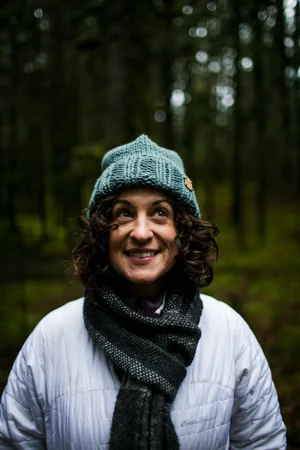
KEDC & RCAC’s first ROCE workshop in 2025. This partnership continues to support local residents, now through a no-cost well assessment opportunity. Read below to learn more.
Some economic development work starts with a practical question: who can help Kodiak with something our community needs, and how do we make that help easier for residents to reach?
That question matters in a rural island community. The right expertise, funding, or technical assistance may exist, but it is not always located here. A program may be useful, but residents may not know it exists. A partner may be ready to help, but needs a local connection to understand the community and make the work fit Kodiak.
That is why partnerships are part of economic development.
KEDC’s work with Rural Community Assistance Corporation, also known as RCAC, is one example. This partnership did not begin with private well assessments. It grew from broader community development work focused on helping Kodiak residents identify local priorities and turn ideas into action.
Building from the ROCE workshops
In 2025, KEDC and RCAC worked together through the Recharge Our Community’s Economy, or ROCE, workshop series. The workshops brought residents, business owners, professionals, community partners, and local leaders together to talk about Kodiak’s economy and identify areas where people wanted to take action.
Out of that work, several community-led Value Chains began to take shape. These included areas such as housing, walkability, business support, seafood market opportunities, childcare, and other community priorities. The point was not just to talk about challenges. The point was to help people organize around specific ideas, identify partners, and begin moving toward practical next steps.
That kind of work takes structure. Ideas need a place to land. People need a way to stay connected. Community members need support to move from conversation to action.
KEDC and RCAC have continued supporting this work through facilitation, technical assistance, and project support. KEDC helps groups organize, meet, and keep their goals moving. RCAC brings tools, experience, and outside technical assistance that can help local ideas become more developed.
This is one way economic development works in practice. It creates a structure for local knowledge, community energy, and outside support to come together.
From partnership to direct community benefit
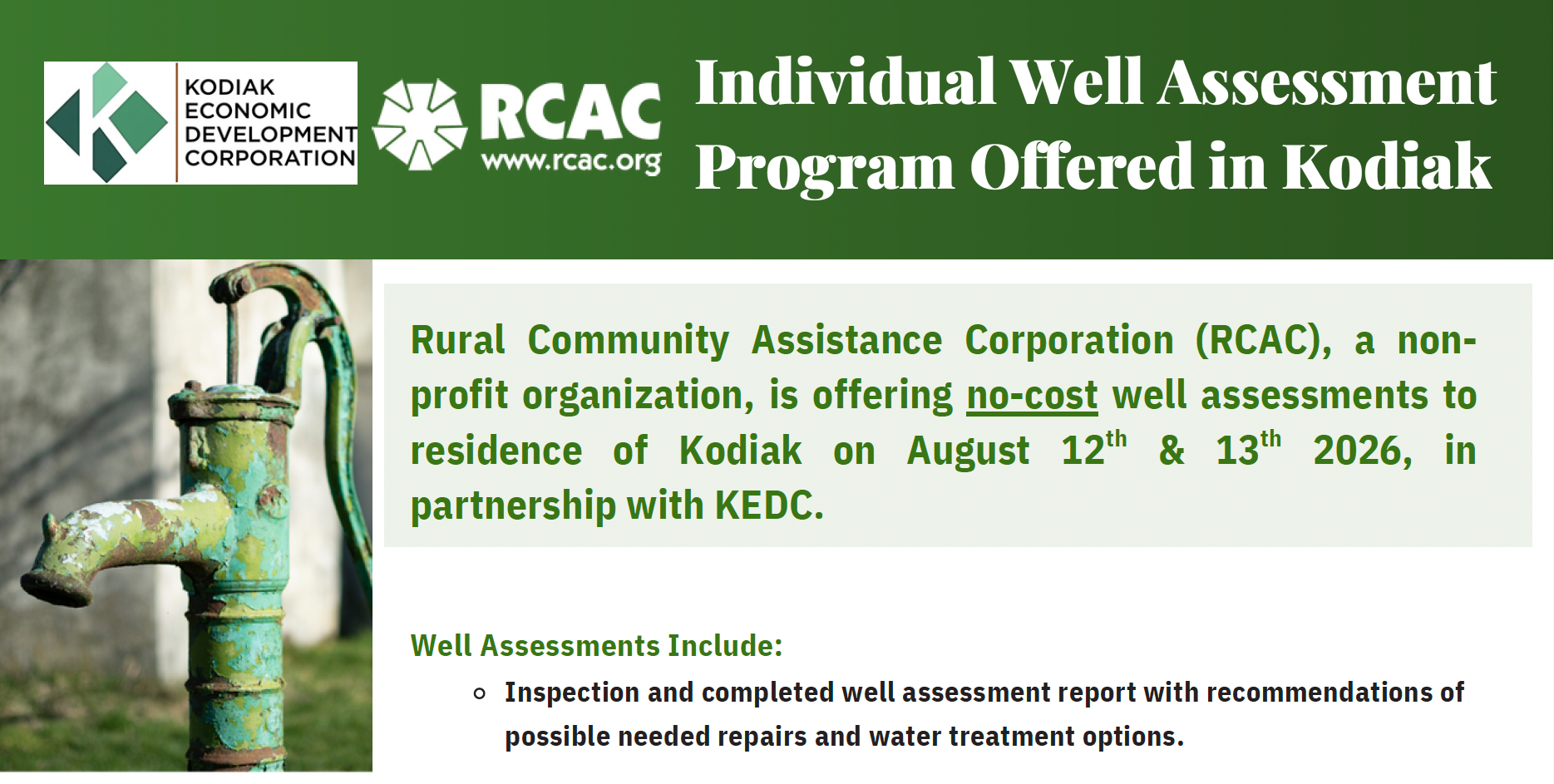
The no-cost private well assessment opportunity is an outgrowth of this broader relationship with RCAC.
This August, RCAC will be in Kodiak to provide individual private well assessments for residents who rely on private wells. For households, this is practical help. A well assessment can help residents better understand their water quality, learn more about the condition of their well, and receive recommendations for maintenance, repairs, or treatment options if they are needed.
That matters to daily life. It matters to families, renters, homeowners, property owners, and anyone who depends on a private well for household water.
It also shows how partnership work can lead to direct community benefits. A relationship that began around community economic development and local Value Chains is also helping bring useful technical assistance to residents.
What residents can receive
RCAC will be in Kodiak on August 12 and 13, 2026, to provide individual private well assessments at no cost to participants. The service is available to people who use water from a private well, including renters, homeowners, property owners, and households that may not own the well themselves.
Participants will receive an individual well assessment, a completed report with recommendations, water sample testing for several common indicators, a well owner resource package, and possible follow-up technical assistance.
RCAC estimates the value of this visit at approximately $750 per participant. Through this program, Kodiak residents can request the service at no cost.
For a homeowner, that may mean better information about the condition of a well. For a renter, it may provide useful information to share with a landlord or property manager. For a household that has questions about water quality, it can offer a clearer place to begin.
Why this is economic development
At first, a private well assessment may sound separate from economic development. It is not a large construction project, a new business, or a public planning meeting.
But economic development is also about the basic conditions that help people live safely, maintain their homes, and stay in the community.
In Kodiak, household costs, housing conditions, infrastructure, workforce stability, and community health are connected. When residents have access to practical information and technical assistance, they are better able to care for their homes and plan for repairs or maintenance before problems become larger and more expensive.
This kind of work also helps build local understanding. Each assessment gives a household useful information, but the broader effort also helps partners better understand local needs, common concerns, and where additional support may be helpful in the future.
That is part of the value of bringing outside technical assistance to Kodiak in a way that is connected to local realities.
What KEDC’s role looks like
KEDC’s role in this kind of work is often about connection and follow-through.
That can mean building a relationship with a partner organization, identifying a community need, helping make the opportunity understandable to residents, sharing the information locally, and connecting people to a service they may not have known was available.
It can also mean helping outside partners understand Kodiak. A program that works well in one community may need local context to work well here. Travel, timing, outreach, household needs, and community trust all matter.
This work can be easy to miss because much of it happens before the public sees the opportunity. But for the household that receives the assessment, the benefit is direct.
A resident gets information, a partner brings expertise, the community gains a little more capacity. And to KEDC that is economic development in action.
Partnership work can lead to practical results
Good partnerships do not always begin with a large public project. Sometimes they begin with a workshop, a grant opportunity, a technical assistance program, or a conversation about what Kodiak needs.
The important part is what happens next.
Can the opportunity reach residents? Can the information be shared clearly? Can local needs be communicated back to the partner? Can the relationship help support future work?
KEDC’s work with RCAC is one example of how partnership-based economic development can bring practical resources to the island. It connects outside expertise with local priorities, supports residents who rely on private wells, and builds on the community-led work that began through the ROCE workshops and Value Chains.
How to participate:
Assessment slots are limited to approximately 6 to 8 participants per day. Additional registrants will be placed on a waiting list and scheduled as openings become available.
Kodiak residents interested in participating should complete the registration form by clicking the button below.
Questions about the well assessment process may be directed to RCAC at: