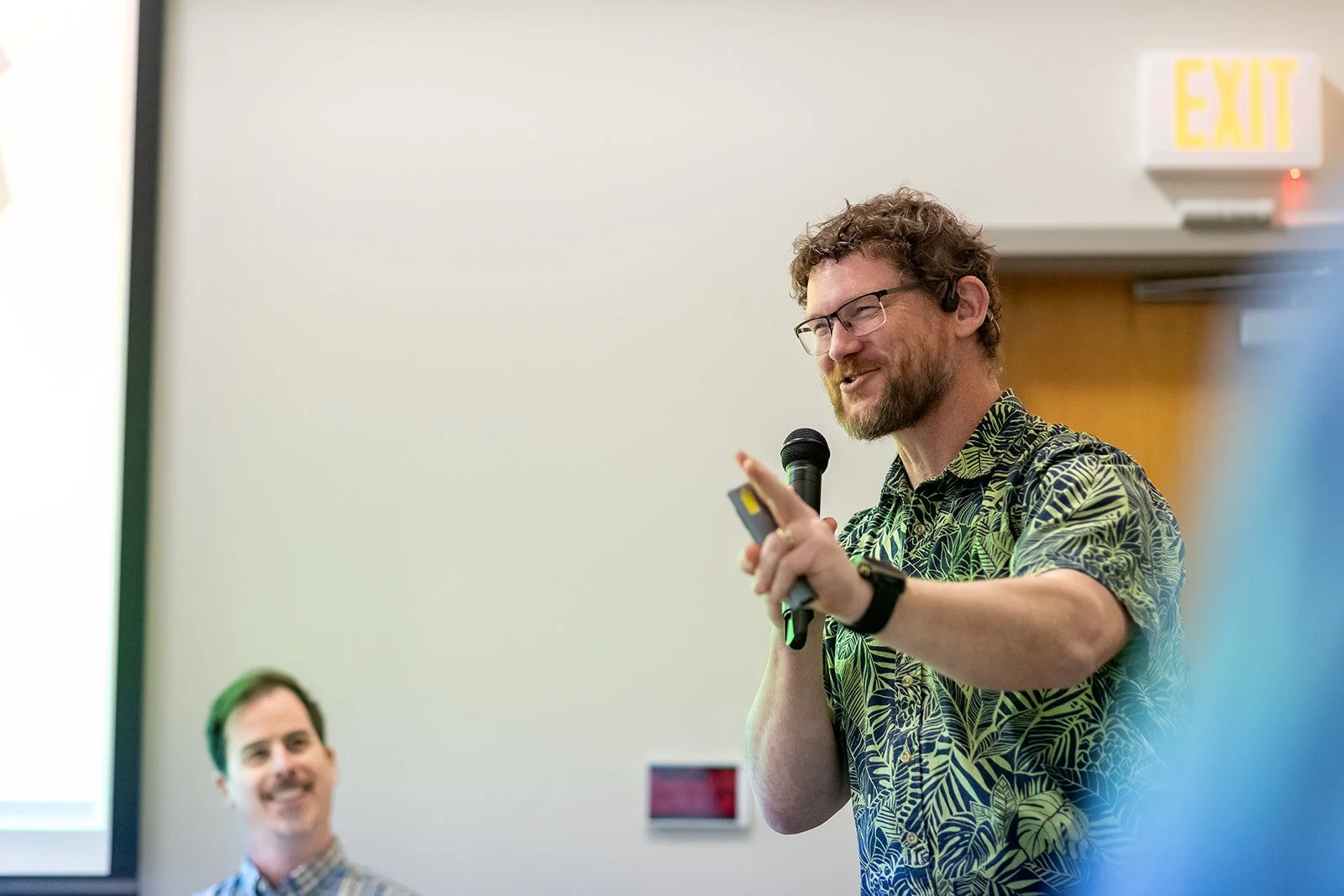
KEDC’s first Kodiak Workforce Forum brought together employers, educators, workforce partners, industry leaders, and community members to discuss the challenges and opportunities shaping Kodiak’s workforce.
On April 28, 2026, Kodiak Economic Development Corporation hosted the Kodiak Workforce Forum: Supporting Today’s Industry, Building Tomorrow’s Opportunities. The event was created to bring people into the same room around a shared concern: how Kodiak can better align workforce needs, education, training, and long-term economic opportunity.
Across the community, employers are working hard to hire and retain employees. Educators are building programs that help students connect with future careers. Workforce partners are providing services, training support, and resources. Local businesses and organizations are adapting every day to the realities of operating in a remote island community.
What we do not always have is enough time and space to bring those efforts together in a focused way.
That was the purpose of the forum.
A Strong Community Response
Interest in the forum exceeded expectations.
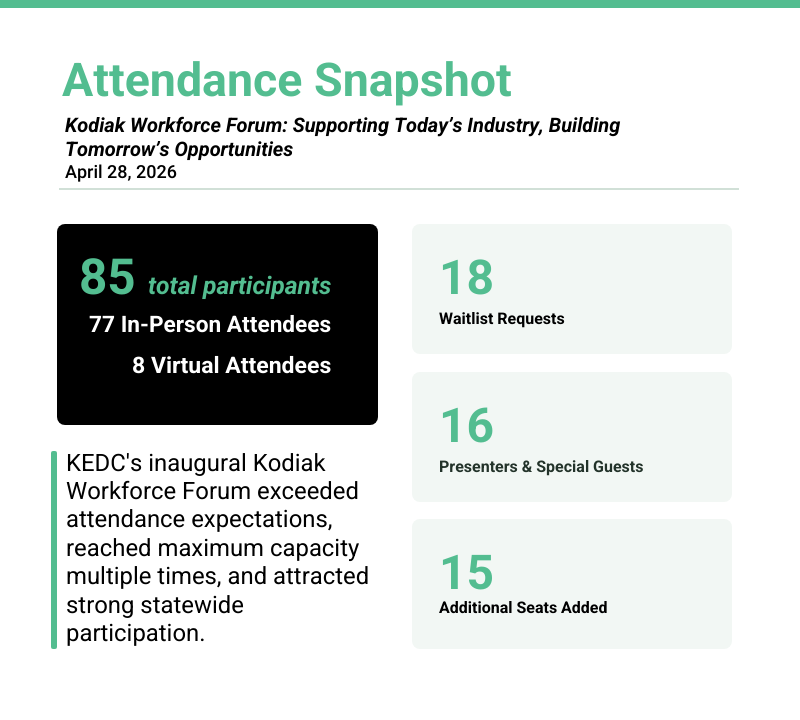
A total of 77 participants attended in person, with an additional 8 joining virtually. As registration continued to grow, KEDC opened additional seating more than once and eventually established a waitlist of 18 people.
That response showed how strongly workforce issues are being felt across Kodiak. It also showed that employers, organizations, educators, and community members want opportunities to talk about these challenges together.
Participants represented a broad cross-section of Kodiak’s economy, including small businesses, government, education, healthcare, tribal organizations, workforce development, construction and trades, maritime and mariculture, tourism and hospitality, nonprofit organizations, technology, and community members.
The forum was designed to be participatory. KEDC did not want the event to only be a series of presentations. The goal was to share information, listen to employers and community partners, gather workforce feedback, and begin identifying practical areas where continued coordination may help.
Why KEDC Hosted the Forum
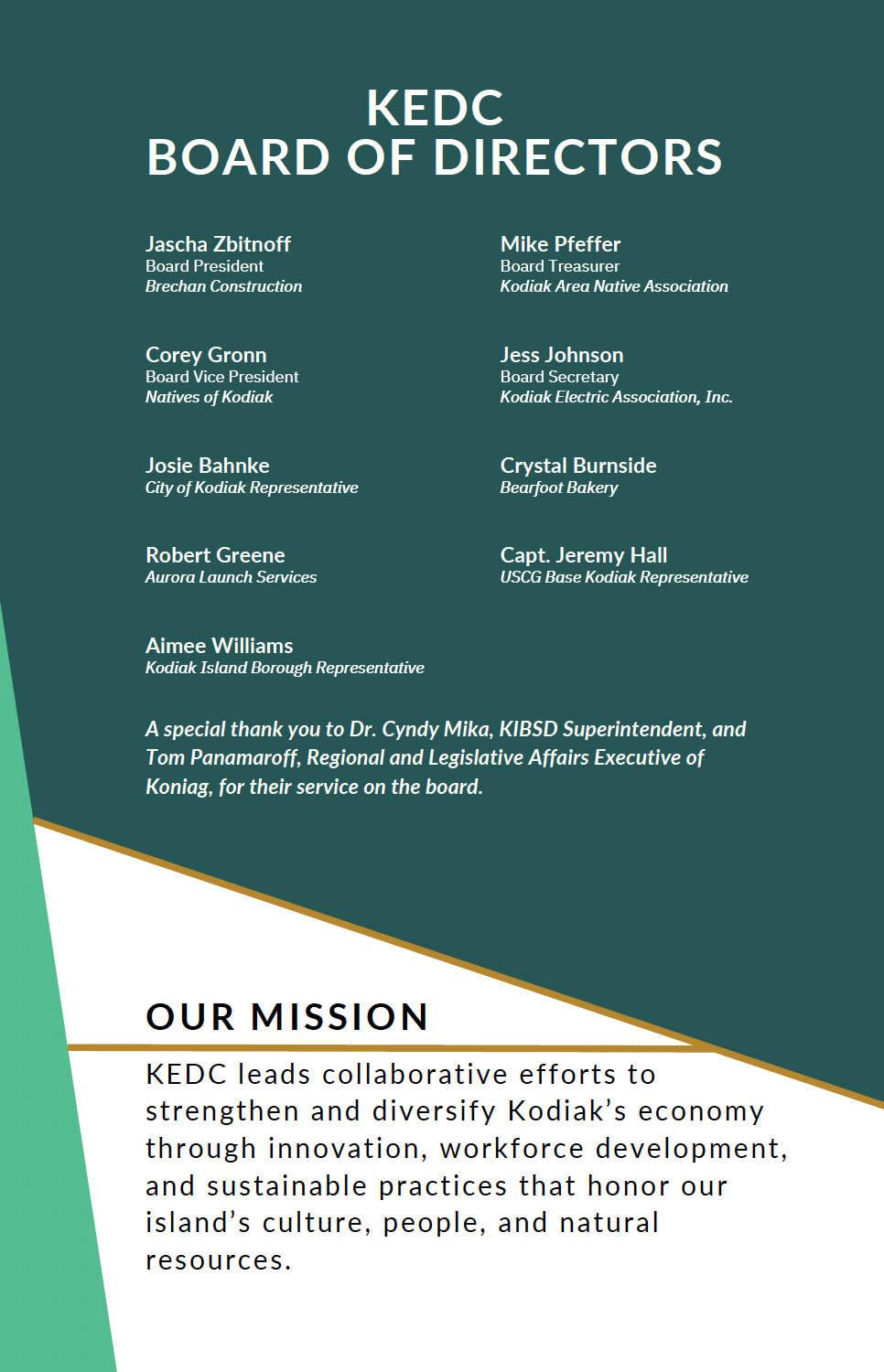
KEDC developed the forum because workforce issues are affecting nearly every part of Kodiak’s economy.
Some employers are struggling to find qualified applicants. Others are working to retain employees in the face of housing shortages, high costs, childcare limitations, and burnout. Educators and workforce partners are working to prepare students and job seekers for available opportunities, while employers continue to identify gaps in technical skills, soft skills, workplace readiness, and leadership development.
These issues show up differently from one industry to another, but they are connected.
A small business owner trying to stay fully staffed may be facing the same housing and cost-of-living pressures as a healthcare employer, a construction company, a maritime business, or a public agency. A student considering whether to stay in Kodiak may not know about the full range of careers available here. An employer may be ready to offer job shadowing, internships, or entry-level opportunities, but may not know how to connect those opportunities to schools or training programs.
KEDC’s role is to help create space for those conversations.
The forum gave employers, educators, workforce organizations, industry leaders, and community partners a way to compare what they are seeing, learn from each other, and better understand the career pathways already growing in Kodiak and across Alaska.
The Structure of the Day
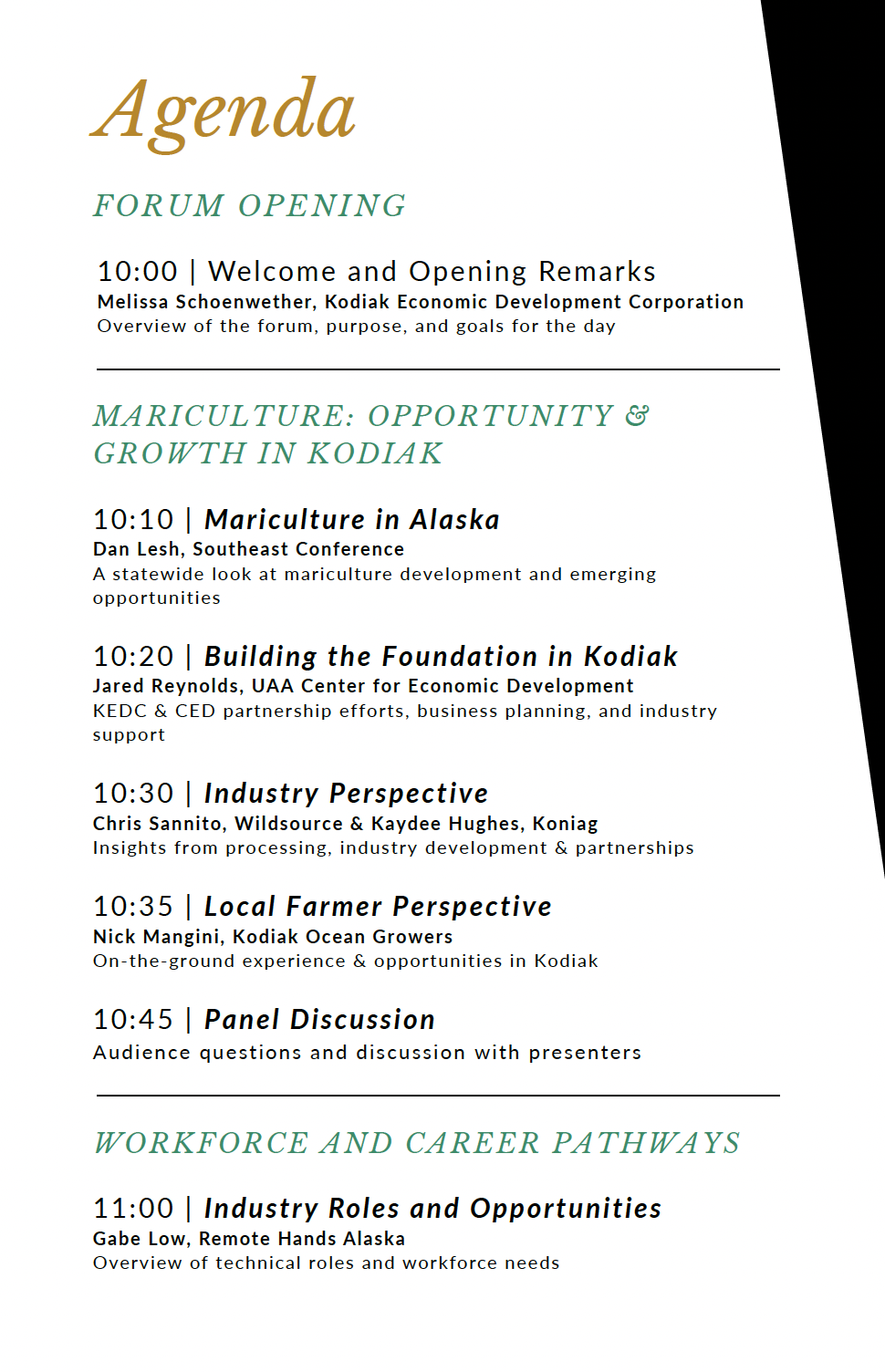
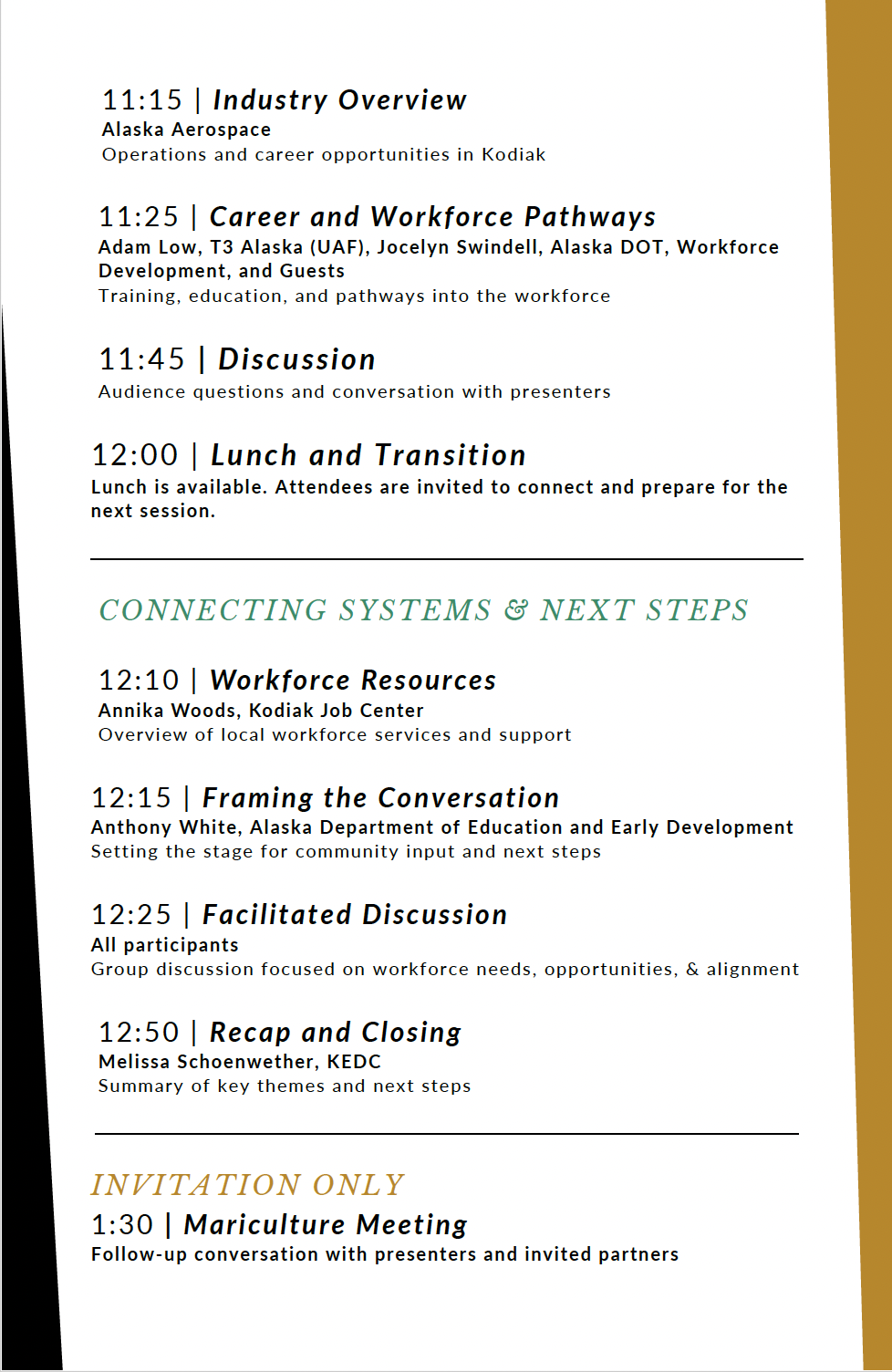
The forum was organized to move from industry opportunity, to workforce pathways, to direct community input.
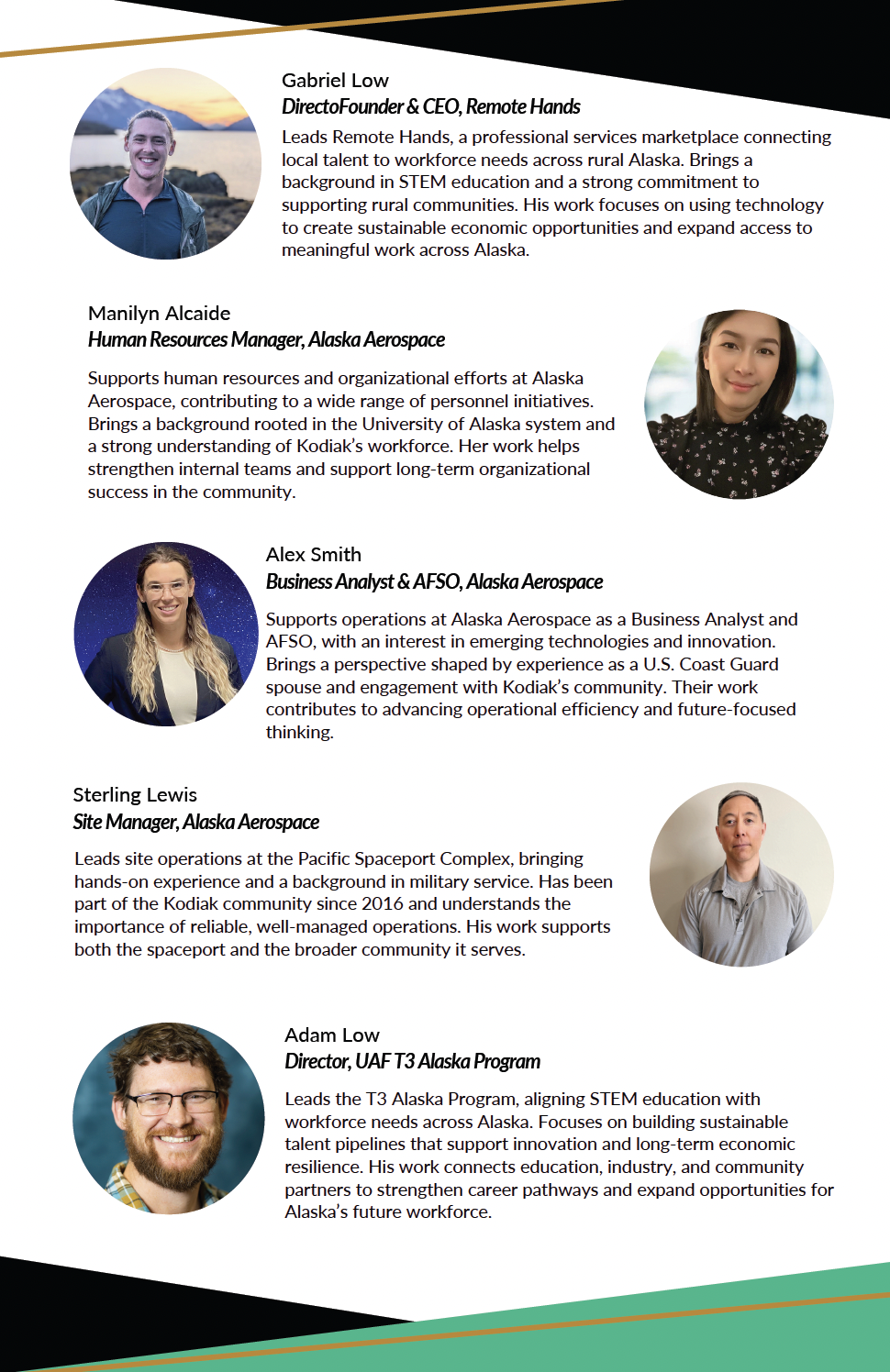
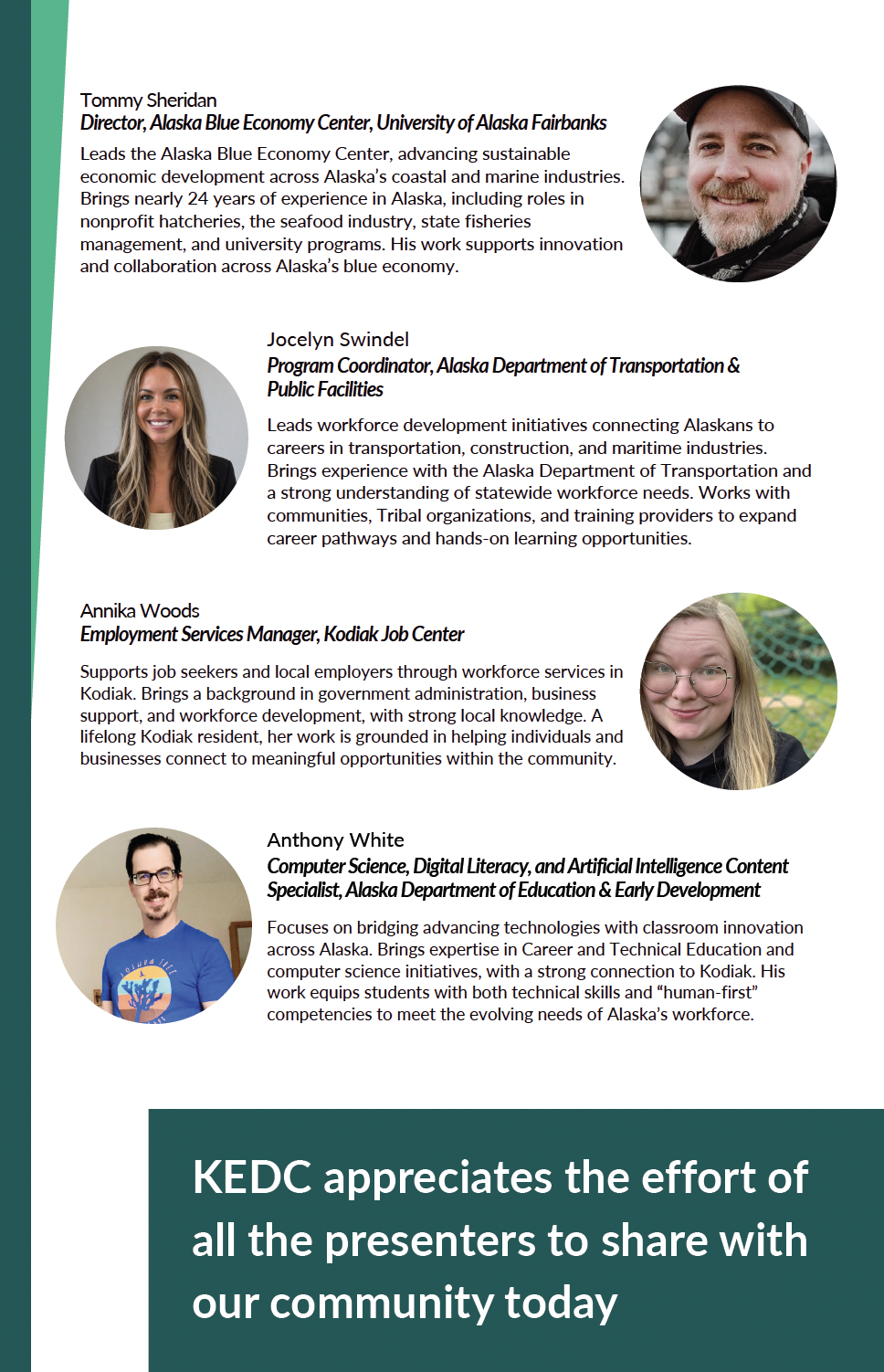
The first portion of the program focused on mariculture and the blue economy. Presenters shared a statewide look at mariculture development, current work taking shape in Kodiak, and the importance of local farmers, processors, tribal organizations, and statewide partners in building the industry.
The second portion focused on workforce and career pathways. Presenters discussed technical roles, aerospace operations, rural workforce innovation, Career and Technical Education, workforce resources, and the importance of connecting students and workers with real opportunities.
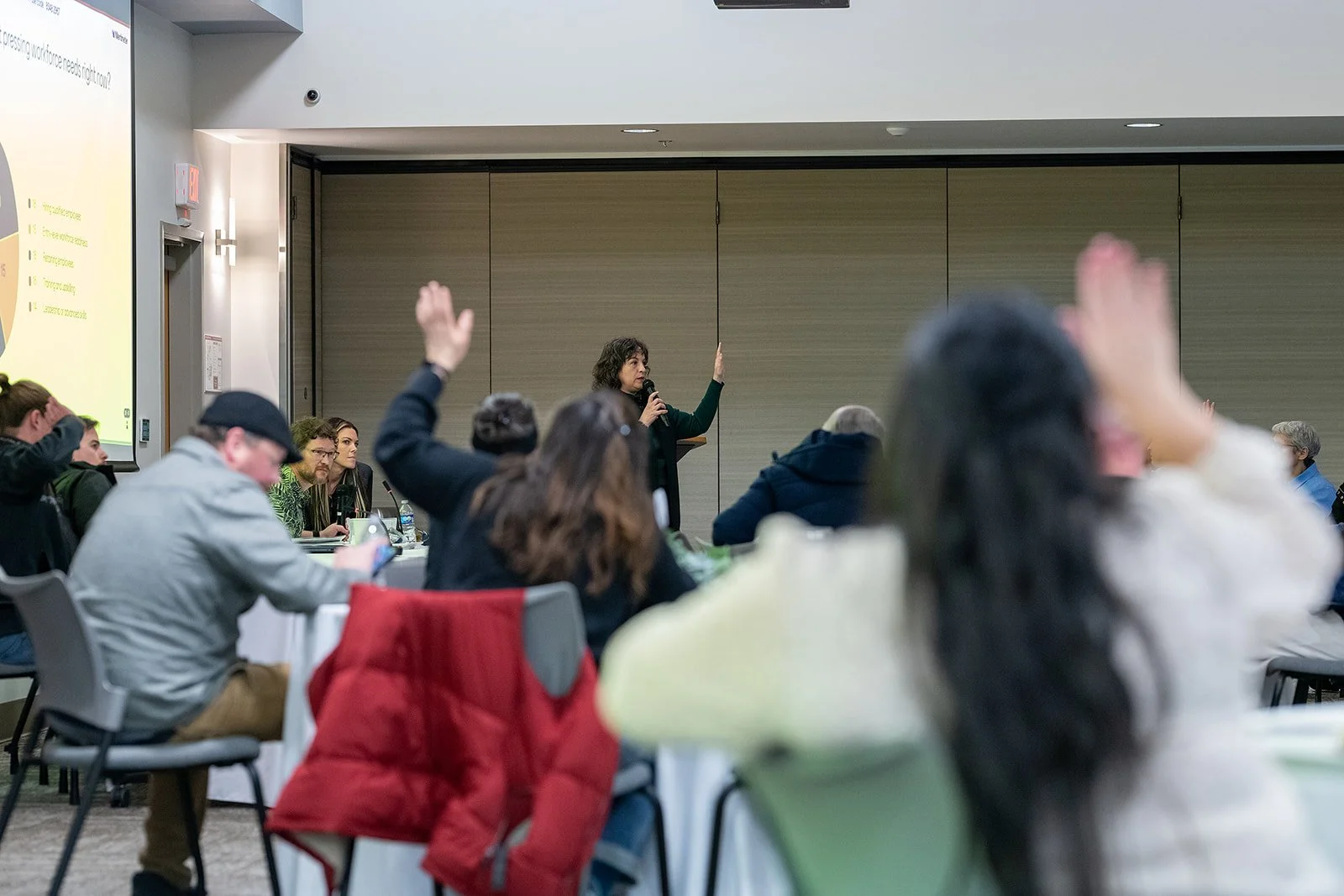
The final portion shifted toward community input and next steps. Participants used facilitated discussion and real-time engagement tools to share workforce challenges, identify priorities, and offer ideas for strengthening Kodiak’s workforce.
That structure was intentional. KEDC wanted to connect emerging industry conversations with the workforce realities employers are facing today. Kodiak’s future opportunities matter, but so do the immediate pressures that businesses and organizations are navigating right now.
What We Heard About Workforce Needs
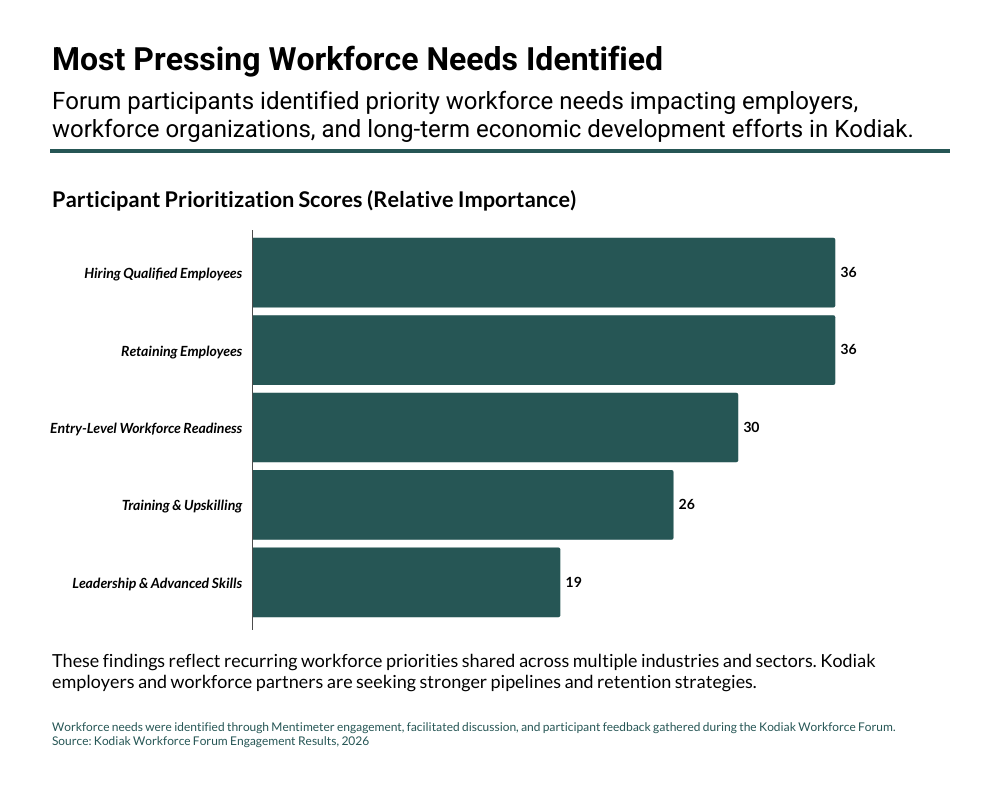
One of the most important goals of the forum was to gather direct input from participants.
Through facilitated discussion, audience participation, Mentimeter engagement tools, and post-event feedback, several workforce themes came up repeatedly.
Housing availability and affordability were among the most significant concerns. Participants noted that housing limitations affect recruitment, retention, relocation decisions, and long-term workforce stability.
Cost of living was another major theme. Employers and community members connected high costs to burnout, employee stress, difficulty relocating new workers, and challenges keeping people in Kodiak over time.
Participants also identified hiring and retention as top workforce priorities.
In the forum’s engagement results, hiring qualified employees and retaining employees received the highest scores among workforce needs.
Entry-level workforce readiness, training and upskilling, and leadership development were also identified as important priorities.
Mariculture as an Emerging Opportunity
The forum opened with mariculture because it is one of the clearest examples of how economic development and workforce development are connected.
Mariculture is already taking shape in Kodiak through the work of local farmers, processors, tribal organizations, statewide partners, and economic development groups. The conversation at the forum helped show that this is not an abstract future idea. It is active work that depends on planning, infrastructure, processing capacity, training, investment, and strong relationships.
KEDC’s mariculture work is connected to a broader effort to support economic diversification and long-term opportunity tied to Kodiak’s coastal economy. Through partnerships with organizations such as Southeast Conference, UAA Center for Economic Development, WildSource, Sun’aq Tribe of Kodiak, Koniag, and local mariculture producers, KEDC is helping support conversations around business planning, processing capacity, workforce needs, and industry growth.
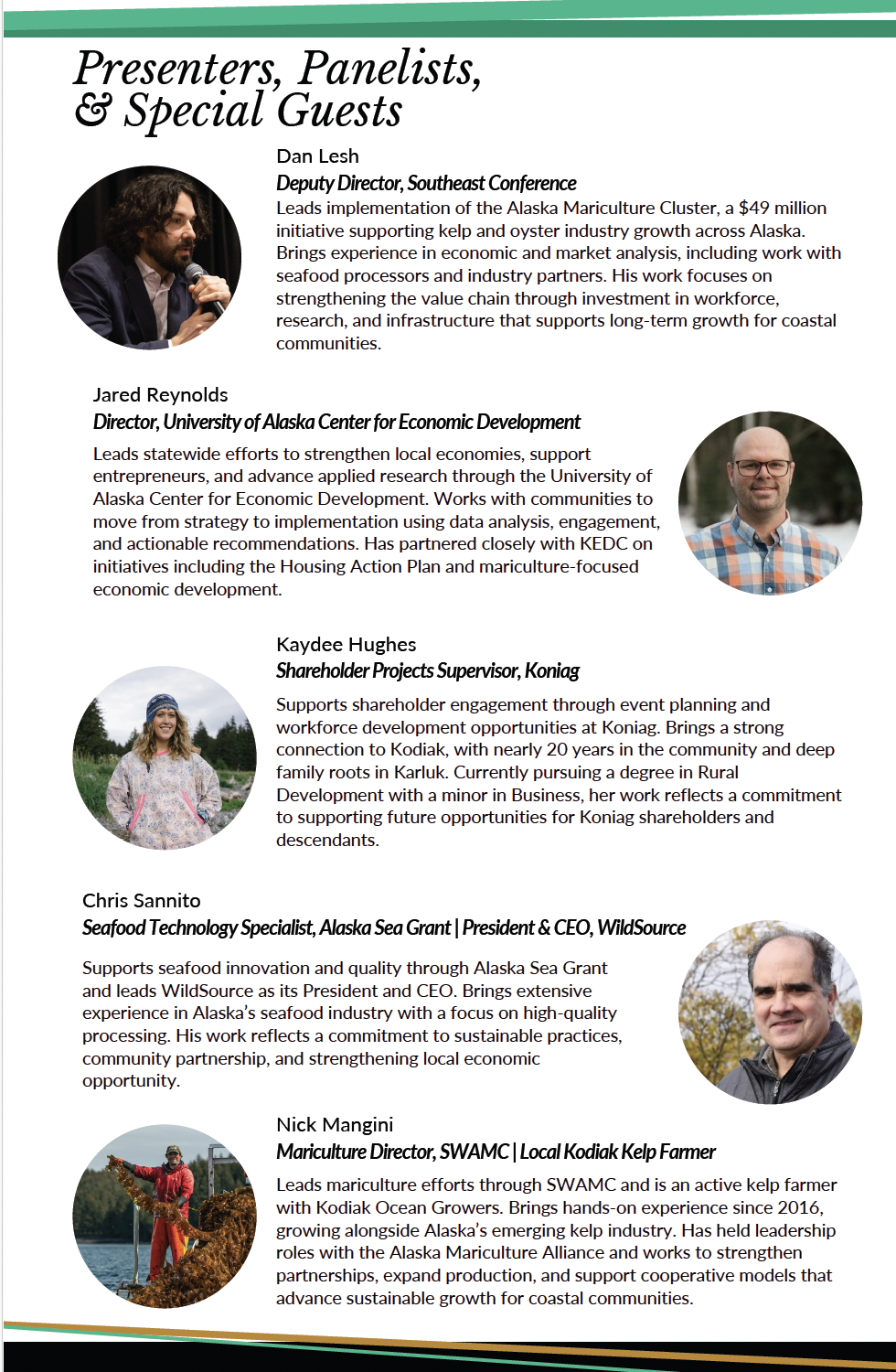
The forum gave attendees an opportunity to hear from people working at different parts of the mariculture system, including statewide strategy, business planning, processing, and the local farmer perspective.
That range of voices was important. Emerging industries require more than enthusiasm. They need coordination. They need market understanding. They need infrastructure. They need workforce planning. They also need local knowledge from the people doing the work on the water, in the processing space, and across the community.
Career Pathways Are Already Here
Another major theme from the forum was the importance of career pathways.
Career and technical opportunities are not something Kodiak is only preparing for in the future. They already exist in trades, healthcare, maritime work, technology, aerospace, small business, public service, and other fields.
The challenge is helping more people see those opportunities and access them.
Forum presenters and participants discussed the importance of Career and Technical Education, Kodiak College, workforce training, internships, mentorship, job shadowing, and stronger employer engagement. These conversations included students beginning to explore careers, adults seeking new skills, and workers who may want to transition into different roles.
This matters in a community like Kodiak.
We are a remote island with real workforce challenges, but we are also a place filled with people who solve problems, learn by doing, and step into complex roles across industries. Stronger career pathways can help more local residents connect with the jobs that exist here and prepare for the opportunities that are emerging.
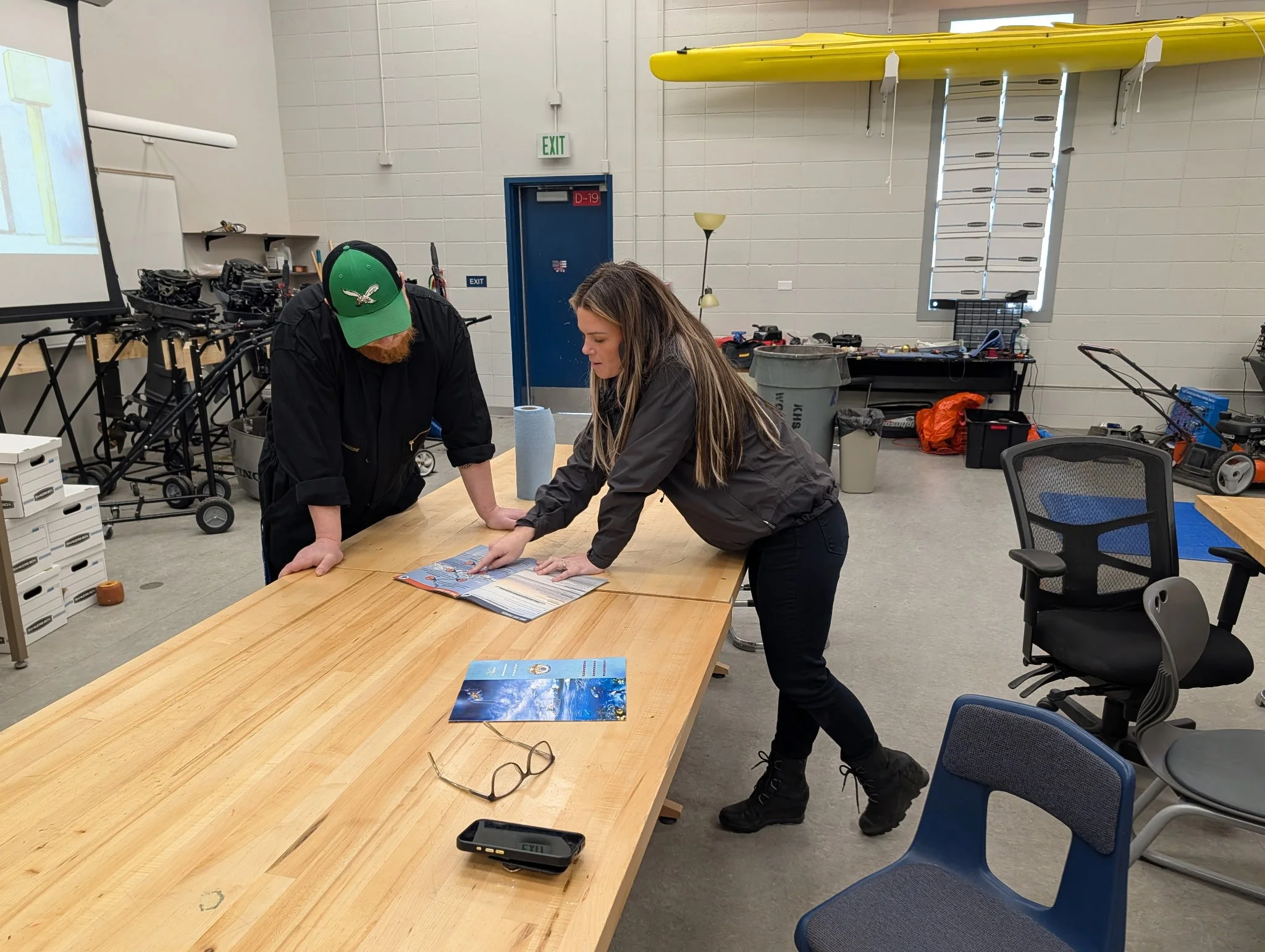
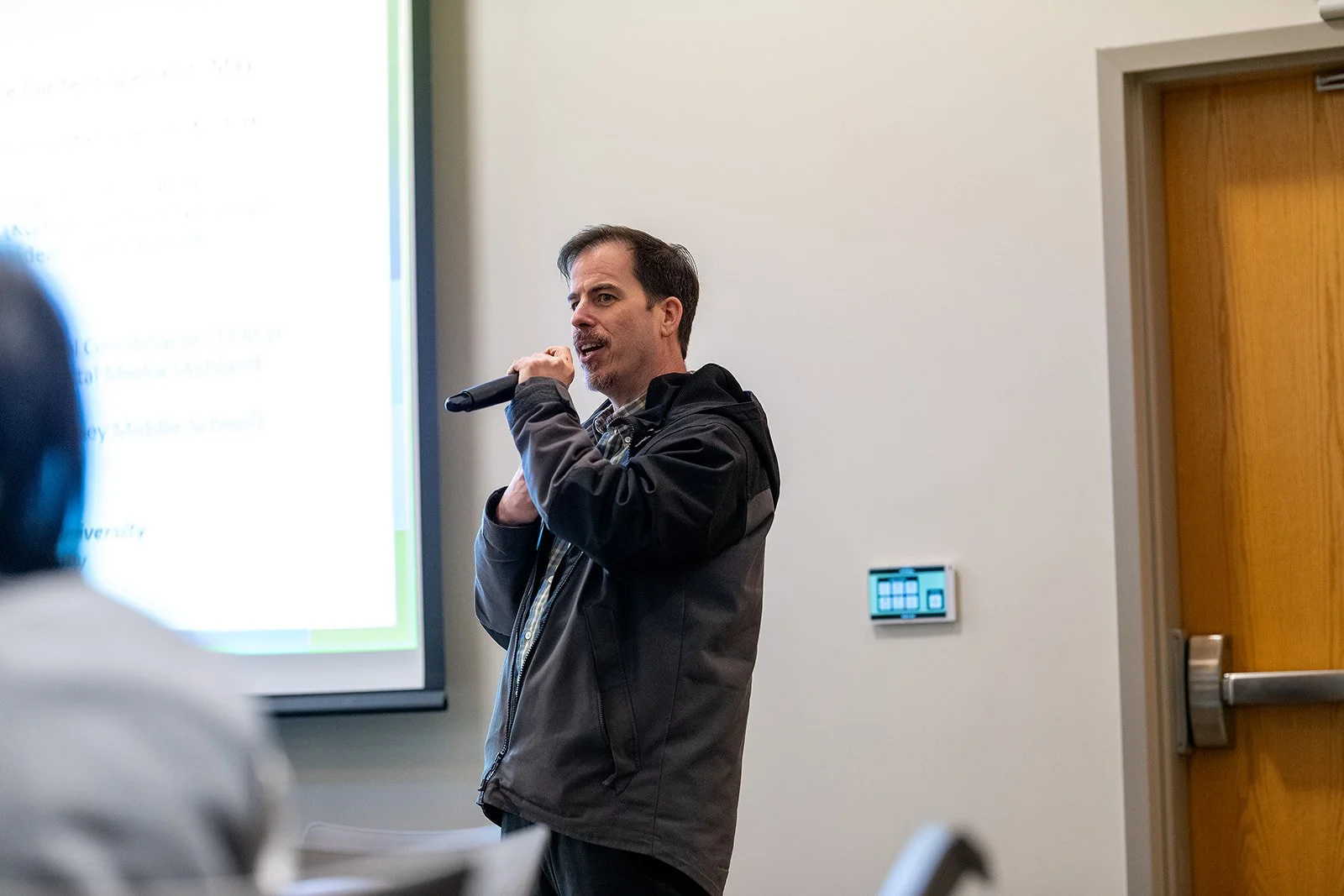
Local Kodiak High School CTE teacher and Alaska Department of Transportation Workforce Development guest discuss opportunities available to Alaskans.
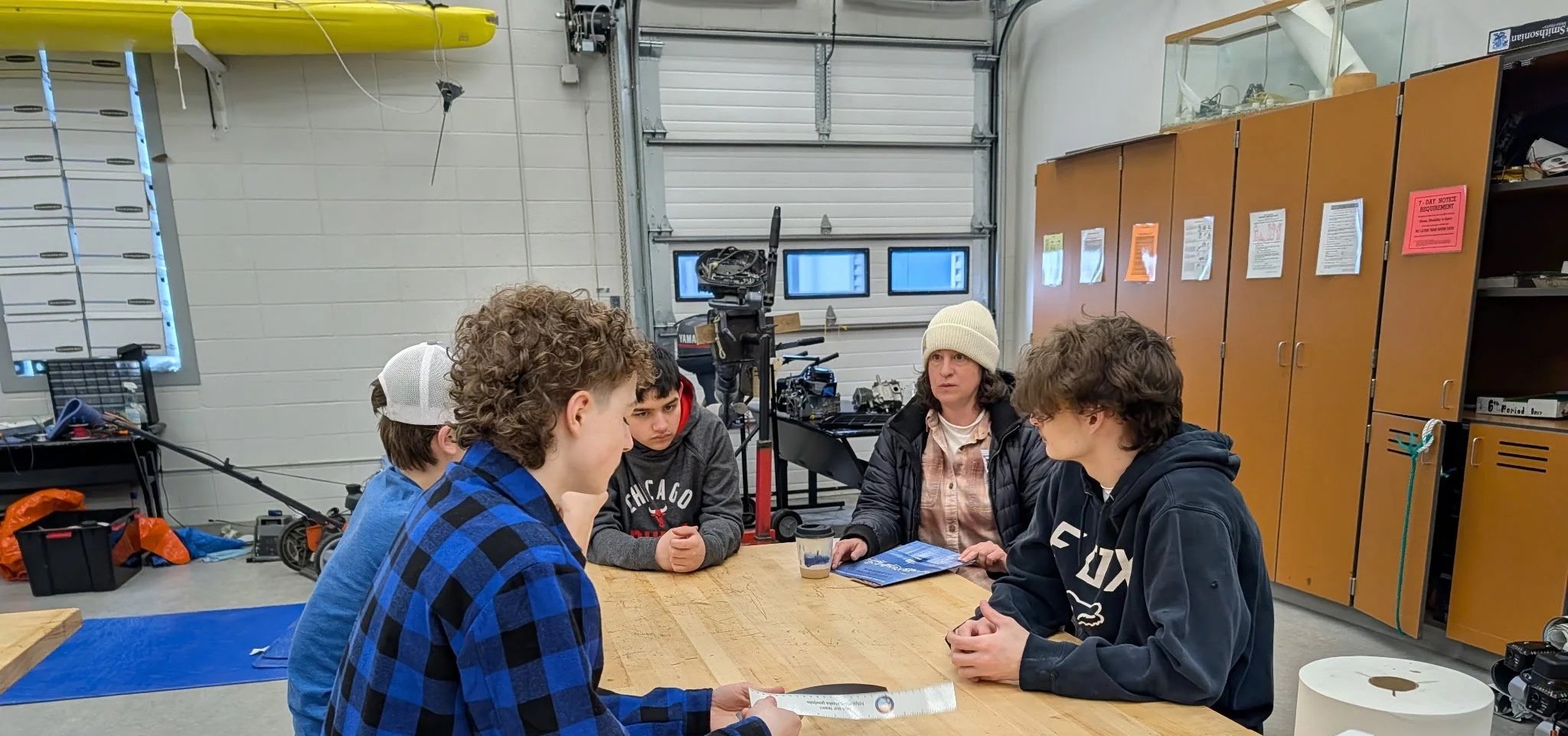
KEDC also coordinated visits to Kodiak High School CTE classrooms, where visiting workforce and education partners met directly with teachers and students. These conversations helped connect statewide workforce leaders with local education efforts and gave students a chance to hear more about career pathways, technology, and future opportunities.
Aerospace, Technology, and Advanced Industry
The forum also helped increase awareness of Kodiak’s role in aerospace and advanced industry.
Presentations and related visits involving Alaska Aerospace generated strong interest from attendees and visiting workforce partners. Several participants shared that the event expanded their understanding of the career opportunities connected to aerospace operations in Kodiak.
This is an important part of the workforce conversation. Many students and residents may not fully realize that advanced technical careers exist here. Increasing awareness of those opportunities can help strengthen the connection between local education, workforce training, and future employment.
Technology and rural innovation were also part of the discussion. Presenters highlighted how technology can help rural communities create new models for work, connect local talent with opportunities, and prepare students for a changing workforce.
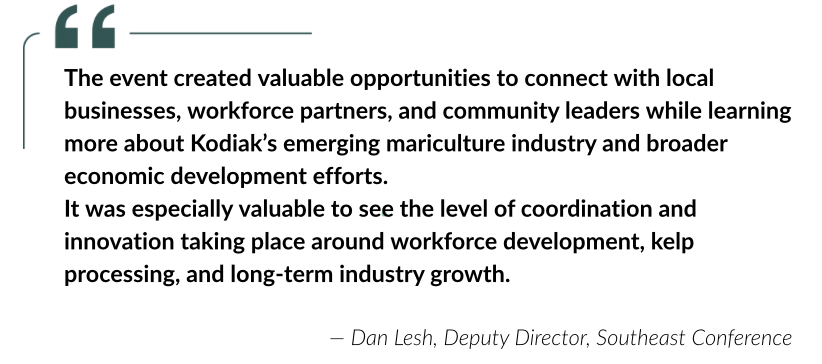
Adam Low of the University of Alaska Fairbanks T3 Alaska Program shared that he was impressed by the extent to which business and community members in Kodiak are involved in creating effective educational pathways. He also noted the community’s commitment to developing pathways for learners of all ages to find fulfilling, well-paid jobs that allow them to remain engaged in the Kodiak community.
That observation reflects one of the strengths of Kodiak. People here care about the next generation of workers. They also understand that workforce development has to include students, adults, employers, educators, and community partners.
“I am impressed by the extent to which business and community members in Kodiak are involved in creating effective educational pathways.
The event highlighted the community’s commitment to developing pathways for learners of all ages to find fulfilling and well-paid jobs that allow them to be engaged members of the Kodiak Community.”
Why Site Visits and Local Conversations Mattered
The forum was only one part of the broader effort.
KEDC also coordinated meetings and site visits before and after the main event so visiting partners could better understand Kodiak’s businesses, industries, workforce realities, and economic development efforts.
These visits were important because they gave local businesses and organizations time to speak directly with statewide partners. They also gave visiting guests a more complete picture of what it takes to operate, grow, hire, train, and plan for the future in a remote coastal community.
Visits and conversations included businesses, industry partners, education programs, healthcare, mariculture, aerospace, small business, trades, and workforce organizations.
This is a practical example of KEDC’s role.
KEDC can help people see local businesses and organizations more clearly. We can help create opportunities for partners to understand what is going well, where challenges exist, and where additional support may be useful. We can help connect local experience with statewide resources and expertise.
That work matters because good decisions require local context.
The Value of Partnership
"The KEDC Workforce Forum was a resounding success. When you get fisherman, mariculture specialists, tribal leaders, DOT, university representatives, school leaders, and economic developers in the same room talking, something real can come from that work. Kodiak kids deserve career and technical education programs built around what Kodiak needs. This event felt like a step in that direction. I am grateful to KEDC for making this event happen."
- Anthony White, Computer Science Content Specialist, Alaska Department of Education and Early Development
One of the strongest themes throughout the forum was the importance of partnership.
Kodiak’s workforce challenges will not be solved by one organization, one employer, or one program. The issues are too connected for that. Housing, childcare, wages, training, transportation, cost of living, recruitment, retention, and career exposure all affect each other.
The forum helped create space for people to see those connections more clearly.
Participants identified opportunities for expanded internships and mentorship, stronger school and employer engagement, increased workforce pathway visibility, technical training access, and stronger local workforce pipelines.
They also emphasized the importance of practical workforce solutions that reflect Kodiak’s unique economic and geographic realities.
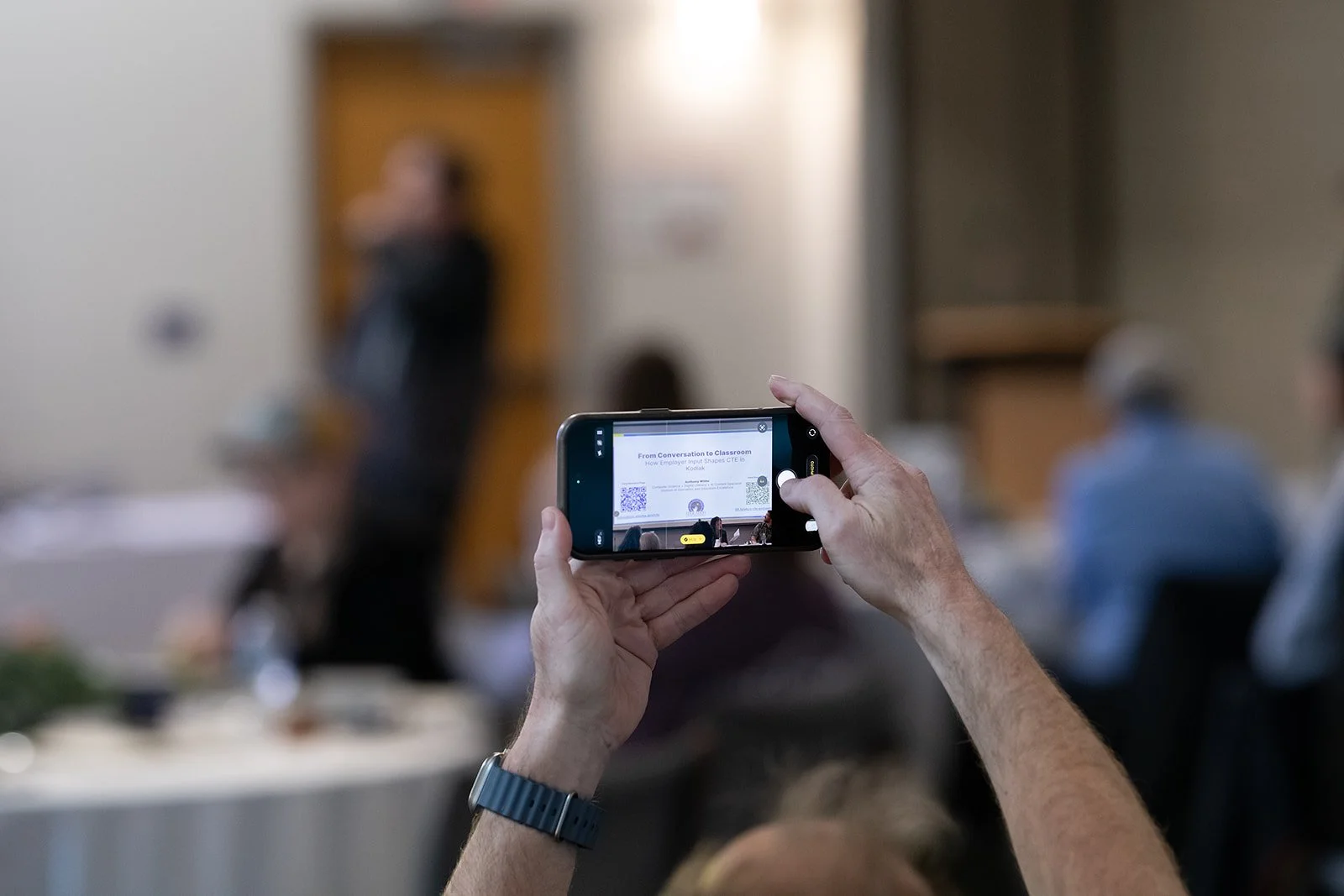
Several participants shared appreciation for the opportunity to sit down together, talk openly, and better understand where challenges and opportunities overlap across industries. People also responded positively to the ability to access support materials through links and QR codes, while also recording questions, reactions, and feedback in real time during the event.
That feedback is useful.
It shows that people want information, but they also want ways to participate.
What This Means for KEDC’s Work
The Kodiak Workforce Forum gave KEDC valuable information that can help guide future workforce efforts.
The feedback gathered through the event can support future conversations with employers, educators, workforce organizations, local government, and funding partners. It can also help inform planning around Career and Technical Education, employer engagement, training needs, youth career exposure, and economic development priorities.
The forum also reinforced the importance of KEDC’s role as a convener.
KEDC does not need to duplicate the work of schools, employers, workforce agencies, or industry partners. The value is in helping connect those efforts, identify shared needs, gather useful information, and create momentum around practical next steps.
When KEDC brings people together, we are helping build the relationships and structure needed for long-term progress.
Looking Ahead
The forum was the beginning of a longer conversation.
There is strong interest in continuing workforce discussions in Kodiak, especially around workforce readiness, student career exposure, mentorship, employer engagement, training access, and stronger connections between schools, workforce organizations, and local employers.
KEDC will continue using the feedback gathered from the forum to support future workforce conversations and planning efforts. We will also continue highlighting the businesses, organizations, industries, and partners that are helping shape Kodiak’s economy.
Kodiak has real challenges. We also have people who are willing to show up, talk honestly, share ideas, and work toward solutions.
That combination matters.
The first Kodiak Workforce Forum showed that our community is ready to have deeper workforce conversations. It also showed that Kodiak has the relationships, knowledge, leadership, and commitment needed to keep building opportunity across the island.
KEDC is grateful to every participant, presenter, sponsor, partner, business, and organization that helped make this forum possible.